
Grand County VINELink Coverage
Utah VINE is a free automated custody-information and notification service available at all hours. UDC states that a caller may use a name or offender number to ask whether a UDC offender is in custody and whether a release date exists. Online access runs through VINELink, and Utah also provides the 1-877-884-8463 hotline.
UDC participation is documented. Local participation requires a more careful check. Confirm that the selected Grand County booking appears and that Grand County is the supplying agency before promising an alert for that case. A county-fed record concerns county jail custody. A UDC-fed record concerns state custody or supervision. Matching names do not merge those events.
VINE does not replace the record that explains why custody ended. An alert may say release or another custody change without stating bond, time served, court order, transfer, parole, or destination. For that detail, ask Grand County Jail for the booking-and-release sheet or use UDC and Board records for a state case.
Search Grand County VINELink Records
Start with enough data to avoid a false match. A full legal name is useful, but an offender number is stronger. Compare the supplying agency, identifier, age or birth date when shown, location, and custody status. Open Record Details only after those fields align. If several results share a name, do not choose based on a photo or name alone.
- Open VINELink and choose Utah as the jurisdiction.
- Select the available custody or offender search.
- Enter the full name or offender number and review all possible matches.
- Confirm the supplying agency and identity fields before opening the record.
- Read custody status, event, location, and release information exactly as labeled.
- If no match appears, try verified name variants, then contact the jail or UDC.
The Grand County released inmates search path covers the records-request and court options needed when VINELink does not resolve the event.
Open the official VINELink portal to compare the live Utah selection and search controls.
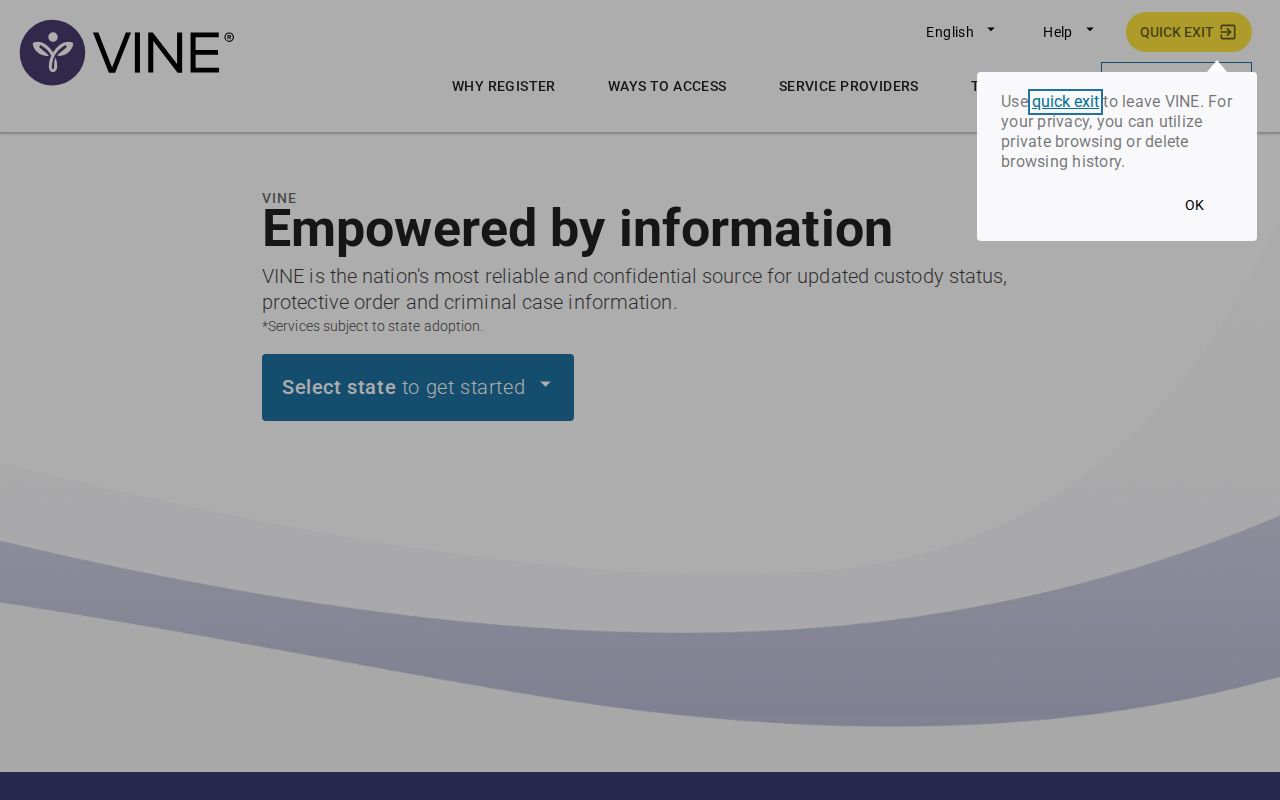
The captured portal illustrates the one-person workflow; the current agency and record details still need to be verified live.
Grand County VINELink Release Fields
Exact fields depend on the agency feed. A released result can contain a status or event, event date, and supplying agency. It may also show an identifier and last reported facility or location. Treat the label as written. “Out of custody” shows that the supplying agency ended custody, but it may not say whether the person entered another agency's custody.
| Field | What it can establish |
|---|---|
| Supplying agency | Which jail or corrections system sent the data |
| Identifier | A number used to distinguish people with similar names |
| Custody status | The agency's current in-custody or out-of-custody label |
| Location | The facility or agency location last supplied |
| Release event/date | A reported event and date, when the feed provides them |
| Notification options | The contact methods and events offered for that record |
A status is not a case disposition. The Utah court docket explains a dismissal, plea, judgment, probation order, or commitment. The jail release sheet proves the operational time and destination. Board and UDC records carry the state parole trail.
Note: Preserve the agency name with any VINELink event so a Grand County jail release is not confused with a UDC custody change.
Register Grand County Release Alerts
Register while the person remains in custody. Retrospective searching cannot recreate an alert that was never set. From the confirmed record, choose “Get Notified” or the current equivalent. The methods and events shown on screen control. UDC documents phone and email, while the live system may offer more.
- Open the verified person's record, not a name-only match.
- Choose the notification option and review the custody events offered.
- Select phone, email, or another method shown by the current interface.
- Enter the destination and create the requested PIN for telephone alerts.
- Complete any email, text, or account confirmation required.
- Keep the PIN and registration details private, then verify any alert with the agency.
Utah's official explanation says notification calls recur every hour for up to 48 hours or until the correct PIN confirms receipt. A missed call can be retried within two hours. Under the described system, email gets one notice. A telephone number that blocks automated calls may prevent delivery.
Review Utah's official notification instructions for the current hotline and alert behavior.
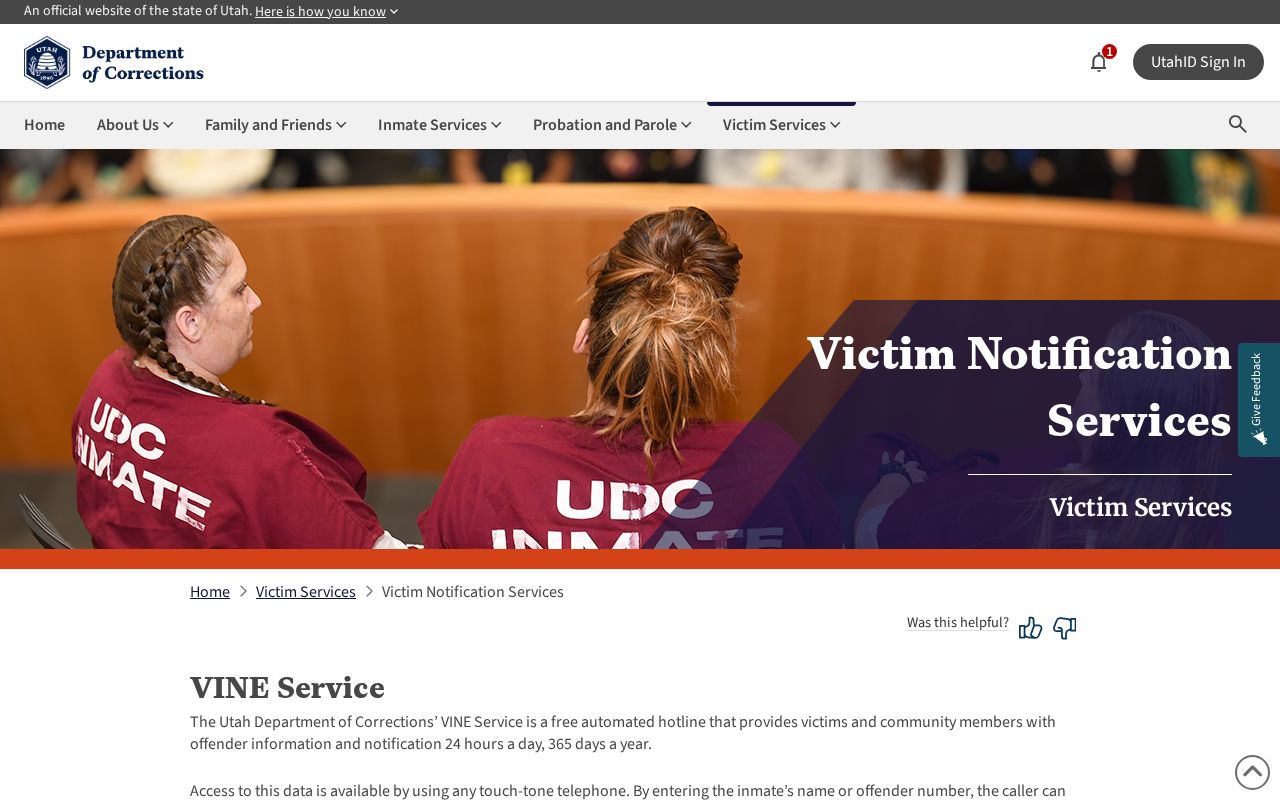
The state page explains both the release-date lookup and the confirmation process needed to stop repeat calls.
Confirm Grand County VINELink Releases
Notifications depend on agency feeds, network delivery, and accurate registration. They can lag. The Utah Board warns that technical issues may cause inaccurate or missing VINELink notices and gives 801-261-6464 for verified Board status. Do not rely on one alert for a legal deadline or a safety decision.
For a recent Grand County Jail event, call the jail at 435-259-8115 and request the release time, release type, and destination, then seek the record under GRAMA when proof is needed. For a state prisoner, compare VINE with UDC Offender Search and the Board decision. A person on parole is outside prison but still under supervision.
BOP and ICE are separate. A Utah VINE result does not prove federal release. Use BOP Inmate Locator for federal prison history and ICE Online Detainee Locator when a local record identifies an immigration transfer. A Grand County roster disappearance can also mean transfer, spelling error, or update delay.
Utah VINELink Alert Retries
Utah's retry pattern is a distinctive part of the service. The hourly calls can continue for two days until the recipient enters the correct PIN. That design gives a registered person more than one chance to receive a time-sensitive notice, but it only works when the phone can accept automated calls and the PIN is available.
The retry does not make the alert conclusive. A release event can be followed by parole, another hold, or transfer to a different agency. If the notice concerns a Grand County jail record, ask the jail where local custody ended. If it concerns a UDC record, compare the Board's order and current UDC legal status. An email notice is also a lead, not a certified release record.
Utah Code section 64-13-14.7 separately addresses victim notification of release. The statute and the VINE service should be understood together, while the live portal remains the source for the methods offered on a specific record.
Note: A PIN confirms receipt of a telephone call; it does not confirm the legal accuracy of the event itself.
Grand County Registry Is Separate
Utah's Sex and Kidnap Offender Registry is a different post-release system. It covers only people with a qualifying registration duty. It is not a list of all people released from Grand County Jail or UDC, and a match does not prove when or why a particular custody event occurred.
No registry match also says nothing about ordinary custody status. Use the official UDC-linked registry and read its disclaimer when the registration question is relevant. Keep that record apart from VINE, which supplies custody information and notifications, and apart from the court docket, which supplies case events.
Missing Grand County VINELink Results
A no-result screen has several possible causes. The name may be spelled differently, the local agency feed may not include that booking, a transfer may not yet be posted, or UDC supervision may have ended. VINELink is built around custody information and alerts, not a complete historical archive of every person once held in Grand County.
For a county case, check the official Grand County current inmate list first. If the person is listed, the snapshot shows current custody at its update point. If absent, call the 24-hour jail line with the full name and useful date information. Ask whether the person was released or transferred, when the event occurred, and which agency received the person. Follow with a focused GRAMA request for documentary proof.
For a state case, search UDC by offender number and then by a verified name. UDC warns that its search includes only people currently incarcerated or supervised by the department. A parolee can appear despite being outside prison, while a person whose sentence has fully terminated may disappear. Search Board decisions and request the termination or expiration record when that happens.
Turn Grand County Alerts Into Proof
Save the time, event label, and supplying agency from a notice. Then contact the office that owns the event. For Grand County Jail, ask for a booking-and-release record that includes the release time, reason, authority, and destination if publicly releasable. For UDC, compare the alert with legal status and the Board order. If the notice points to transfer, search the successor agency instead of describing the person as free.
A court record answers a separate question. It may show bond, dismissal, sentencing, jail credit, probation, or commitment to UDC. Those entries explain legal authority and case outcome but do not always show the exact door-release time. Pair the docket with the custodian's release entry when timing must be established.
Keep the alert's scope narrow. A county-fed notice ends the supplying jail's custody. A UDC notice addresses the state system. BOP and ICE status must be checked in their own official tools. This source-by-source method prevents one alert from being stretched beyond what it proves.
Time also changes the useful source. Before release, VINE registration can warn of a future custody event. Soon after release, the jail or UDC can confirm what its system recorded. Later, the court docket, Board decision, and a formal records request may provide the more durable trail. Grand County's public roster offers no released-person archive, and UDC's public search is limited to people still under its supervision. A past event can therefore be real even when neither current search returns the name.