
Grand County Parole Versus Probation
Utah splits the decision to release from the work of supervision. The Utah Board of Pardons and Parole decides whether and when a person serving a state prison sentence may be paroled. Utah Department of Corrections Adult Probation and Parole, often shortened to AP&P, then supervises that parolee in the community. A district court instead orders felony probation. Probation may follow time in Grand County Jail, but it does not prove the person ever served a state prison term.
Local pretrial supervision is a third status. It can apply after release from law-enforcement custody while a criminal charge is still unresolved. Grand County documents a PreTrial Services role that assists courts with conditional-release decisions and tracks compliance. That local role is not UDC probation and is not parole. The order, agency, and dates must be read together.
| Status | Decision maker | Supervisor | Meaning after release |
|---|---|---|---|
| Parole | Utah Board | UDC AP&P | Outside prison while the sentence continues |
| Felony probation | District court | UDC AP&P | In the community under a court order |
| Pretrial release | Local court | Local service when ordered | Outside jail while charges remain pending |
- Parole
- Conditional prison release while the sentence continues.
- Probation
- Court-ordered community supervision instead of, or after, confinement.
- Discharge
- The formal end of supervision or the sentence, as the governing record states.
- Absconder
- A supervised person alleged to have stopped required contact or compliance.
Check Grand County Release Supervision
The best public starting point is the UDC Offender Search. It includes people currently incarcerated by UDC and people currently on probation or parole. Read legal status apart from facility placement. A search hit does not always mean the person is in prison. It may show a parolee or probationer under community supervision.
Identity checks matter. Search the UDC number first when known. With a name search, compare the middle name, date of birth, offender number, committing court, and case details that are actually available. The search excludes unsentenced county detainees and may omit a person whose UDC supervision has fully ended.
- Collect the full legal name, birth date, and UDC offender number when available.
- Search UDC and open the matching record. Read legal status and location as separate facts.
- Search the Board by name or offender number for the release order and later reviews.
- Check the Utah court case for a probation order, modification, violation, or termination.
- Contact Region 6 AP&P when public records conflict or do not identify the right office.
- Request a Board order or UDC termination record when a discharged person no longer appears.
The broader Grand County released inmates search helps when probation followed a local jail case rather than a UDC prison sentence.
Grand County AP&P Office
Grand and San Juan Counties share UDC Region 6's Moab AP&P office. It is a community-supervision office, not a jail. Staff may limit case-specific details, but the office can identify the correct public channel or records custodian when a UDC record is unclear. The statewide AP&P division supervises parolees and adults placed on felony probation.
Region 6 Adult Probation and Parole
217 E. Center Street, Suite 140
Moab, UT 84532
435-259-7411 ext. 211
The official UDC probation and parole directory identifies the office serving Moab. Check it before a visit because assignments can change.
View the UDC AP&P office source before relying on the captured listing.
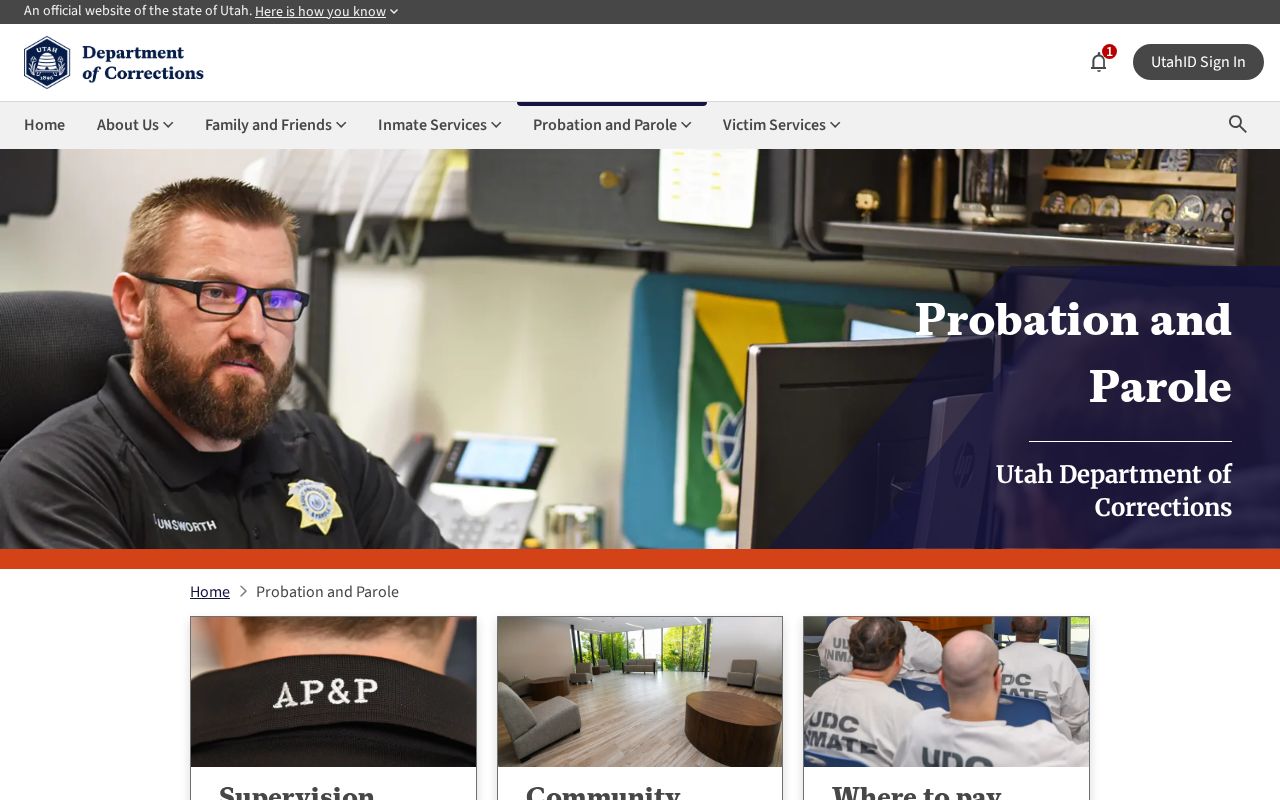
The listing connects a Grand County supervision question to the Moab office, while the Board remains the source for parole decisions.
Grand County Supervision Violations
Conditions depend on the court order, Board order, and AP&P plan. A person may have reporting, treatment, travel, residence, or other case-specific duties. Public summaries should not invent conditions absent from the governing record. A suspected violation may lead to review, sanctions, a warrant request, or return to custody, but the official docket and agency record control.
Absconding means an alleged failure to remain in required contact or compliance. It does not mean the sentence ended. UDC says AP&P agents and fugitive teams work with local, state, and federal partners on warrants. No separate public Grand County AP&P absconder list was found. Check UDC status, the court docket, Board records, and the proper warrant channel before using that label.
Parole violations follow Board procedures. The Board may hold a violation or evidentiary hearing, dismiss allegations, reinstate parole, or make a new custody decision. A return to custody does not erase the first prison release, and it is not a new initial sentence.
Note: A stale third-party entry cannot establish that a Grand County parolee or probationer is an absconder.
Grand County Parole Decision Records
The Board search accepts first and last name, offender number, or a date range. Results can show an upcoming hearing and earlier decisions. Those decisions form a more durable trail than the Grand County jail roster, which is designed for current custody and says nothing about state parole.
Read each outcome as written. The Board can set a parole date, order a rehearing, defer review, or later rescind a future date. Original hearings, rehearings, rescission proceedings, parole-violation hearings, paper reviews, and special-attention reviews have distinct roles. Utah Code sections 77-27-7 and 77-27-9 govern key parts of that process, including original hearing timing and limits on release before a minimum term.
Open the Board's official search to check the current record format.
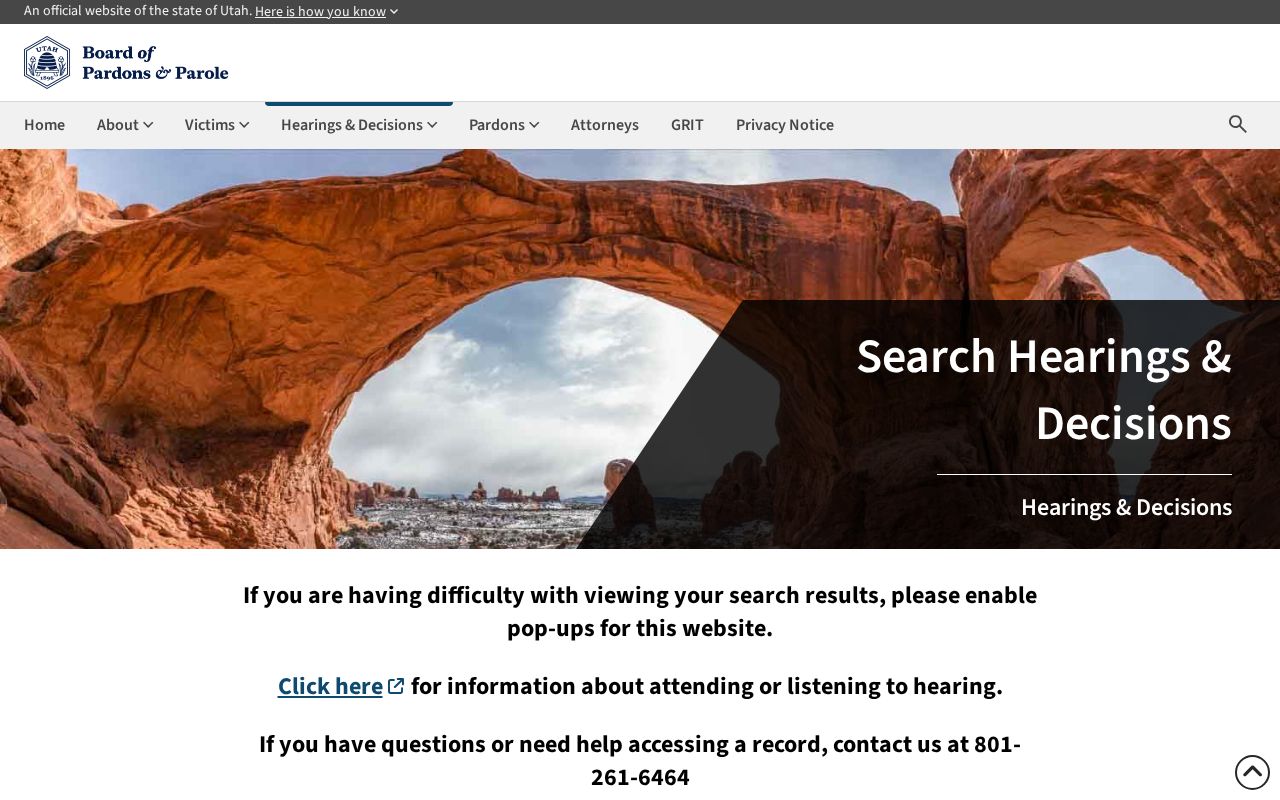
The captured search shows why an offender number is useful and why a dated Board order carries more weight than an uncited estimate.
Grand County Release Property Questions
Release status and property return are separate tasks. Utah law addresses UDC transition planning and inmate property in sections 64-13-10.6 and 64-13-15. Grand County Jail publishes intake and property drop-off information, but it does not publish a release-property procedure, pickup schedule, or promise that property is handled at the same counter as records.
A person released from Grand County Jail should call the jail before traveling and ask which office holds the item. If a release sheet has the wrong time, name, or destination, direct a concise correction request to the record's custodian. Court errors go to the court, UDC status errors go to UDC, and Board-order questions go to the Board.
Note: Grand County Jail's 24-hour telephone line can route a property question, but the site publishes no property-return hours.
When Grand County Supervision Ends
Physical release from prison begins parole. It does not end the sentence. A later Board discharge, sentence termination, or expiration record is stronger proof that parole has ended. Utah Code section 77-27-12 addresses parole discharge and sentence termination, while section 76-3-202 also concerns termination and time on parole. Match the applicable order and law to the case.
Probation ends under the court's order and docket. A satisfaction, termination, or discharge entry may establish the final event. Local pretrial supervision ends through the pending case process and should not be confused with felony probation or parole. If the online UDC search returns nothing, that absence may reflect full termination, spelling, eligibility limits, or an update issue. Request the underlying order instead of inferring the cause.
Utah VINE can send custody-change alerts, but it is not a final supervision-discharge record. The Board warns that technical issues can create missing or inaccurate notices. For a disputed end date, use the court, Board, or UDC document that owns the event.
Grand County Supervision Record Sources
Each office owns a narrow part of the release trail. Grand County Jail documents local booking, release time, release reason, and transfer destination. The court owns the probation order and later docket entries. UDC holds current legal status and supervision information. The Board owns parole decisions, rescission orders, and parole-discharge actions. Asking one office for every fact can produce an incomplete answer even when the office responds correctly.
A written UDC request can seek public offender fields, a parole or termination record, and the committing case number. A Board search can locate prior decisions after the live UDC result stops appearing. For probation, search the correct Utah district-court case by case number when possible. Names alone can collide, and the date of a jail release is not always the date supervision began.
Grand County's current jail list is only a custody snapshot. If a name is absent, the person could have bonded out, transferred, completed time, or been omitted because of an update or spelling issue. Confirm the local event before deciding whether to look for probation, parole, or another custodian.
Track Grand County Release Status
A clear sequence prevents terms from being collapsed: jail or prison custody, physical release or transfer, community supervision when ordered, and formal discharge. The sequence can branch. A Grand County defendant may leave jail on pretrial conditions, later receive felony probation, or later be committed to UDC. A state prisoner may leave prison on parole and remain supervised for years before termination.
Record the date, source, and exact label at every step. “Parole date,” “legal status,” “probation,” “termination,” and “expiration” are not substitutes for each other. When two dates differ, determine whether one is a court action, a Board decision, a planned date, or the actual release event. That method gives a more reliable account than treating the newest web result as the whole history.