
USCF Release Paths
The Utah State Correctional Facility is a UDC state prison in Salt Lake City. A Grand County defendant reaches this system only after state commitment. The Grand County Jail list is not the controlling source once that legal custody changes. UDC may hold the person at USCF, Central Utah Correctional Facility, or a contract county jail, while the Utah Board of Pardons and Parole controls parole decisions within the sentence.
A USCF release can lead to parole in the community, placement in a community correctional center, or expiration of the sentence. Parole means the person is outside prison while the sentence and UDC Adult Probation and Parole supervision continue. A community correctional center is also a structured placement. Sentence expiration or a later termination order is the stronger evidence of full discharge.
| State status | Custody meaning | Best evidence |
|---|---|---|
| Inmate | Still in UDC physical custody | UDC legal status and placement |
| Parolee | Released from prison, still supervised | Board order and UDC status |
| Community correctional center | Outside prison in a structured placement | UDC location and release plan |
| Terminated or expired | State sentence or supervision has ended as recorded | Board order or UDC termination record |
Confirm a USCF Release
The first public route is the UDC Offender Search. Search by UDC offender number when possible. A name search requires at least one letter of both first and last name. Results cover people now incarcerated by UDC or now on probation or parole. They exclude unsentenced county detainees and may omit a person whose UDC supervision has fully ended.
Read the result at field level. The live interface exposes offender number, name, date of birth, location, confinement facility, and the exact label “Release Date/Type,” which may be blank or not applicable. UDC also identifies legal status, sentence, Board dates, parole or expiration dates, committing court, and case number as information that may be public. Do not rename a field or infer a date that the official record does not show.
- Search the UDC number first, then try the complete legal name.
- Compare date of birth, middle name, case, and committing court before selecting a person.
- Read legal status apart from facility location; a parolee is not a prison inmate.
- Open the Board hearing and decision search by name or offender number.
- Compare a future Board date with UDC status after the expected event.
- If the person no longer appears, request the UDC termination, expiration, or discharge record.
The site's Grand County release search explains when a local jail record is also needed to bridge a Grand County booking into state custody.
USCF Tuesday Release Process
Utah centralizes most state-prison release activity. The UDC Release Day page says paroles and releases are processed on Tuesdays at USCF. This covers almost all state prisoners confined in Utah county jails as well as people held at USCF or CUCF. Extremely rare county-jail releases are communicated to family. The confinement site and the actual place where the prison release is processed can therefore be miles apart.
UDC says Release Fair participants from USCF and CUCF arrive at the USCF Release Building at 9 a.m. Family members picking up a person housed in a county jail arrive at 10 a.m. A person without a ride may be taken by staff or a volunteer to a nearby UTA TRAX station and released last. When parole is to a community correctional center, UDC transports the person.
The official UDC Release Day source is shown below.
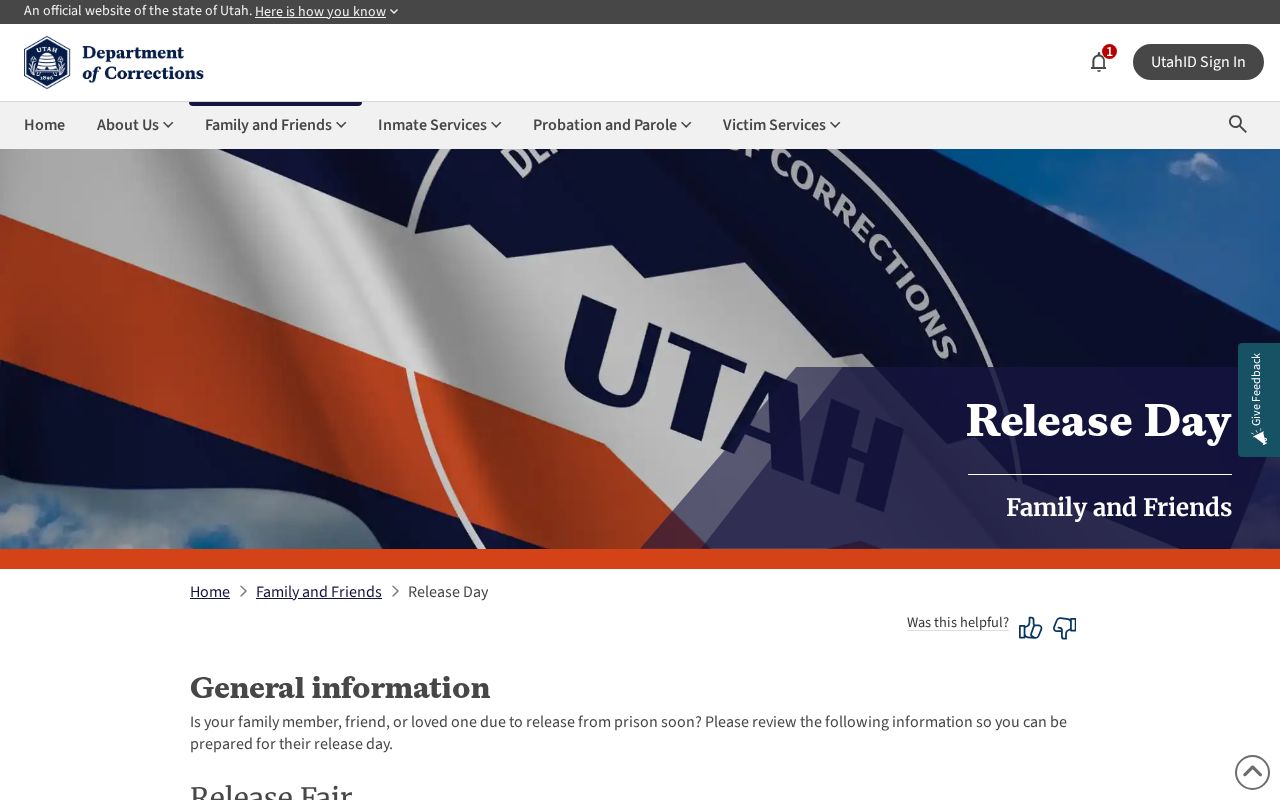
The image documents centralized state logistics and should not be applied to an ordinary Grand County Jail bond or court-ordered release.
Note: Recheck the live UDC instructions before arranging travel because an individual order, transport plan, or operational change may control.
USCF Records and Contact
USCF is located at 1480 N. 8000 W., Salt Lake City, UT 84116. UDC's general main facility line is 801-522-7000. The agency's published division contacts include Prison Operations at 801-545-5525 and Reentry and Rehabilitation at 801-545-5574. Those lines serve different tasks. A case manager may route questions about a current prisoner, while a UDC records request is the durable route for a prior parole, release, termination, or expiration record.
Utah State Correctional Facility1480 N. 8000 W.
Salt Lake City, UT 84116
UDC main facility line: 801-522-7000
Division of Prison Operations: 801-545-5525
Request records with the UDC offender number and committing case when available. Name the exact item: public offender fields, a release or parole record, an expiration or termination record, and any releasable Board order. If the public search has dropped the person because supervision ended, that absence makes a written record more important, not less.
UDC's official USCF page provides the facility information pictured here.
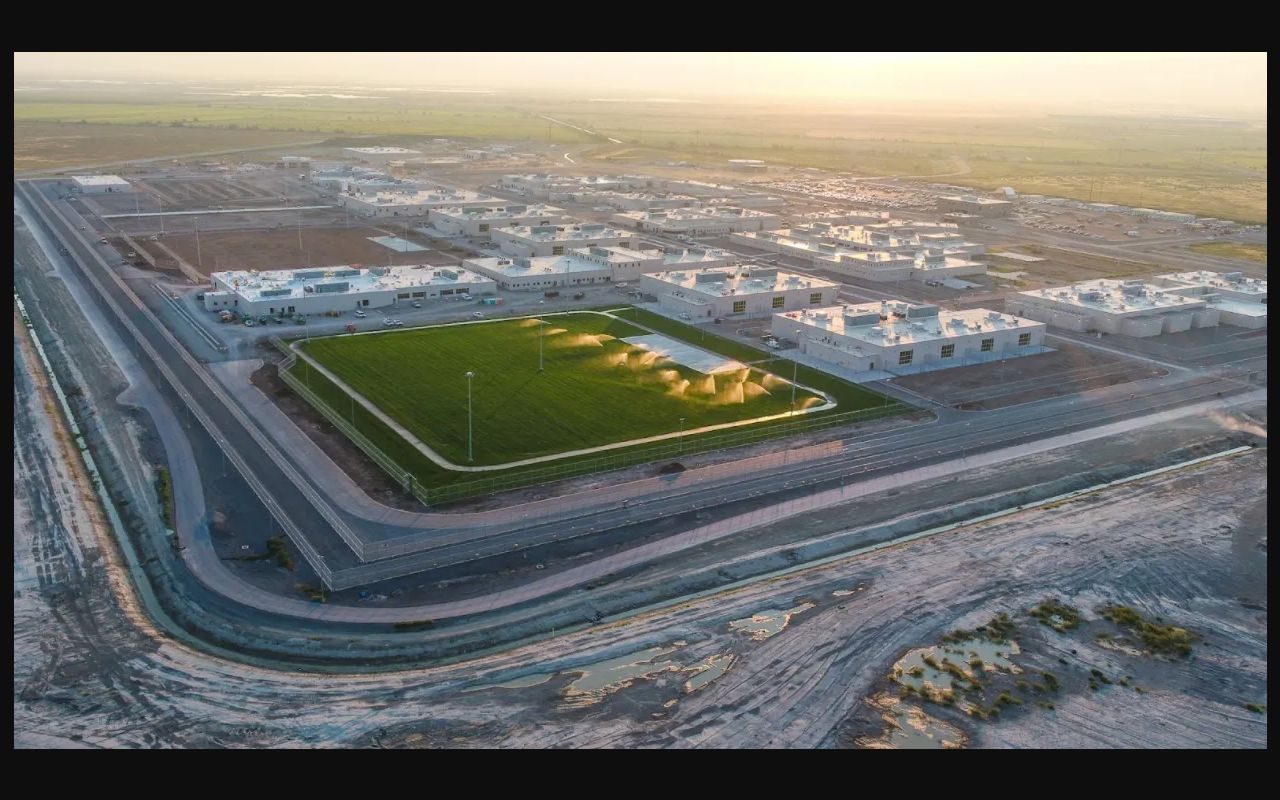
The facility page confirms the prison identity, while Offender Search, Board decisions, and UDC records establish the release.
USCF Release Date Labels
Utah uses indeterminate sentencing. The court imposes a lawful range, and the Board decides whether and when parole occurs within that framework. An original hearing date is when the Board first considers the case. A parole or release date is tied to intended release. A termination or expiration date concerns the later end of supervision or sentence. Those labels are not interchangeable.
The Board may set a parole date, order a rehearing, defer for more information, or change a prior order. Conduct, a new conviction, a detainer, sentence changes, release-plan issues, and rescission proceedings can alter the expected path. Utah Code §77-27-9 generally bars release before the minimum term unless the required findings and hearing occur. Utah does not apply one universal 85-percent formula to every state prisoner.
The UDC search source shows the fields and current-supervision warning captured below.
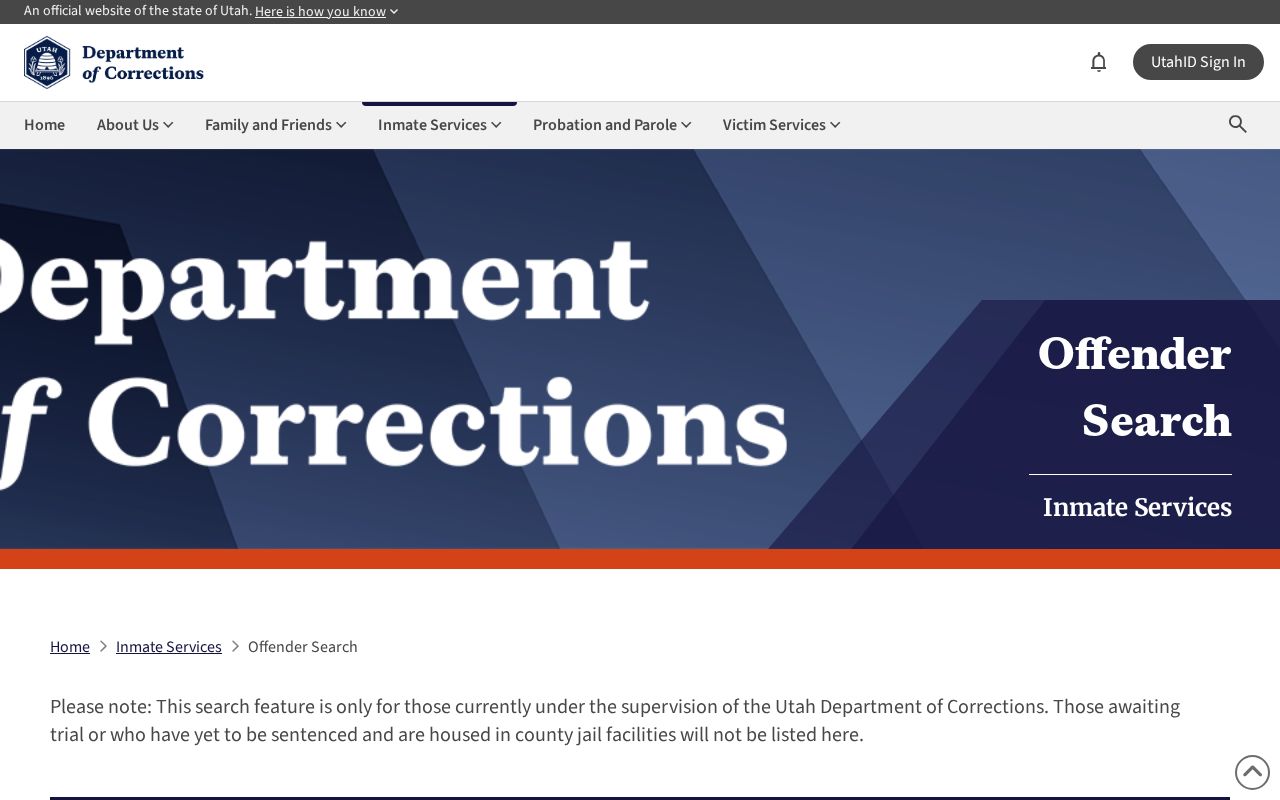
The current-only coverage means a missing former prisoner may require a Board decision or written UDC discharge record.
Grand County State Release Proof
For a Grand County case, preserve the handoff between agencies. A Grand County Jail entry may show transfer to UDC. The committing court docket supplies the sentence and authority. UDC supplies state legal status and operational release information. The Board supplies the parole decision. AP&P confirms ongoing community supervision where public disclosure allows.
- Board order
- The decision that grants parole, schedules review, or changes an earlier release action.
- Physical release
- The point when UDC ends prison confinement under the order and plan.
- Parole
- Community release while state supervision continues.
- Discharge
- The official end of parole or the sentence, not merely departure from USCF.
A family should identify the legal custodian before choosing a pickup location. Someone associated with Grand County may be physically released in Salt Lake City because UDC centralizes the process at USCF. Conversely, an ordinary local detainee released on bond follows the Grand County Jail process, not the state Release Day schedule.
Note: “Released from USCF” and “fully discharged by Utah” describe different milestones and should be supported by different official fields.
USCF Earned-Time Records
Utah Code §77-27-5.4 requires the Board to maintain an earned-time program. Completion of each of up to two qualifying case-action-plan programs can carry at least four months of credit, for a potential eight months of mandatory credit. The statute also leaves room for added discretionary credit. Those figures do not create a date that a family can safely subtract from the maximum term on its own.
Several exclusions matter. Credit may not operate as expected when the release date is too near for transition services, when no current release date exists, when a release contingency remains unmet, when a termination date is already set, or for specified sentence conditions such as life without parole. The Board may also forfeit credit if it determines that a rescission hearing is needed. Program completion can be considered at a later hearing rather than produce an immediate release date.
Ask the Board or UDC to identify the actual order and date label in the individual case. Case-action-plan progress, conduct, detainers, consecutive or concurrent term calculations, sentence amendments, and the release plan can all affect what occurs. A live UDC screen should be cited only for fields it actually displays.
Physical release still follows the approved operational plan. Earned time affects the Board process, while UDC carries out release and AP&P supervises parole. It does not convert a state sentence into a county-jail calculation.
Note: Utah has no single statewide rule that every UDC prisoner serves exactly 85 percent of the sentence.