
Grand County Released Mugshot Status
Grand County's official Jail Inmate List is a date-stamped current-custody list. On the researched date, its visible fields included booking and name identifiers plus charge, statute, court, code, and class data. It did not show a booking photograph or a released-person view. A photo that cannot be found there may still exist in the Sheriff's booking system, but the absence says nothing by itself about release, expungement, or whether the image is legally disclosable.
A booking photo records appearance during arrest processing. It does not prove the allegation, a conviction, or the final result of the case. After a person leaves Grand County Jail, the best photo source depends on which agency created the image. The Sheriff controls a county booking photo. UDC controls a prison image. A court controls its disposition and expungement order, but it may not be the image custodian.
Grand County Mugshot Record Channels
Check official sources in custody order. This avoids treating a state prison photograph as the image from a Grand County arrest. It also keeps news coverage or a cached copy from replacing the record created by the agency. Availability is conditional. Utah law can classify a jail-booking image as protected even when other parts of the booking record are public.
| Channel | Has a photo? | How to access it |
|---|---|---|
| Grand County current roster | No image field was observed | Use only to identify a current booking and its booking number. |
| Sheriff GRAMA request | Possibly, subject to classification | Request the releasable booking photo with the booking-and-release sheet. |
| Sheriff mobile app or social feed | No official source verified | Do not substitute an app for another Grand County or an unofficial product. |
| UDC record | A prison photo may be public | Use UDC for a state offender, not for an ordinary county booking image. |
| Official release or news report | Sometimes | Read it in context, then verify identity and disposition with primary records. |
| Private cached source | Sometimes, but may be stale | Treat it as a lead only and do not rely on it as release proof. |
Utah VINE is useful for custody notices where the agency supplies data, but research did not establish it as a durable Grand County booking-photo archive. Likewise, the Sheriff's current roster cannot be converted into a released mugshot feed. For recent local events, the Released Last 24 Hours workflow identifies the release record that should accompany any image.
Note: Match the full name, agency, booking number, and date before treating two photos or records as belonging to the same person.
Request Grand County Booking Photos
The Grand County Sheriff Forms and Documents page is the correct records route. The general county portal directs Sheriff requests back to that office. The requester supplies identity and contact information, gives dates and a case number when available, describes the record with reasonable specificity, and attaches the requested photo identification. Ask for the image with the release sheet so the photo remains tied to the correct booking and custody event.
- Collect the person's full name, approximate booking date, booking number, and case number if known.
- Complete the current Sheriff GRAMA form and provide the identification required by its instructions.
- Request the publicly releasable booking photograph and booking-and-release record for that specific event.
- Include the signed certification required by Utah's booking-photo law against publish-for-pay placement.
- Ask for electronic delivery, an advance estimate above a chosen limit, and releasable portions if other content must be redacted.
- If access is denied, ask the custodian to cite the classification and legal basis that applies.
A focused description can seek the booking number, admission and release times, releasing authority, release reason or destination, and the photograph if releasable. These are request targets. They do not promise that each field exists or may be disclosed. The Sheriff's page says an ordinary request receives a response within 10 working days and a qualifying expedited request within five working days. Recheck the live form for current fees and submission details.
The official Sheriff GRAMA instructions were captured as the local access source.
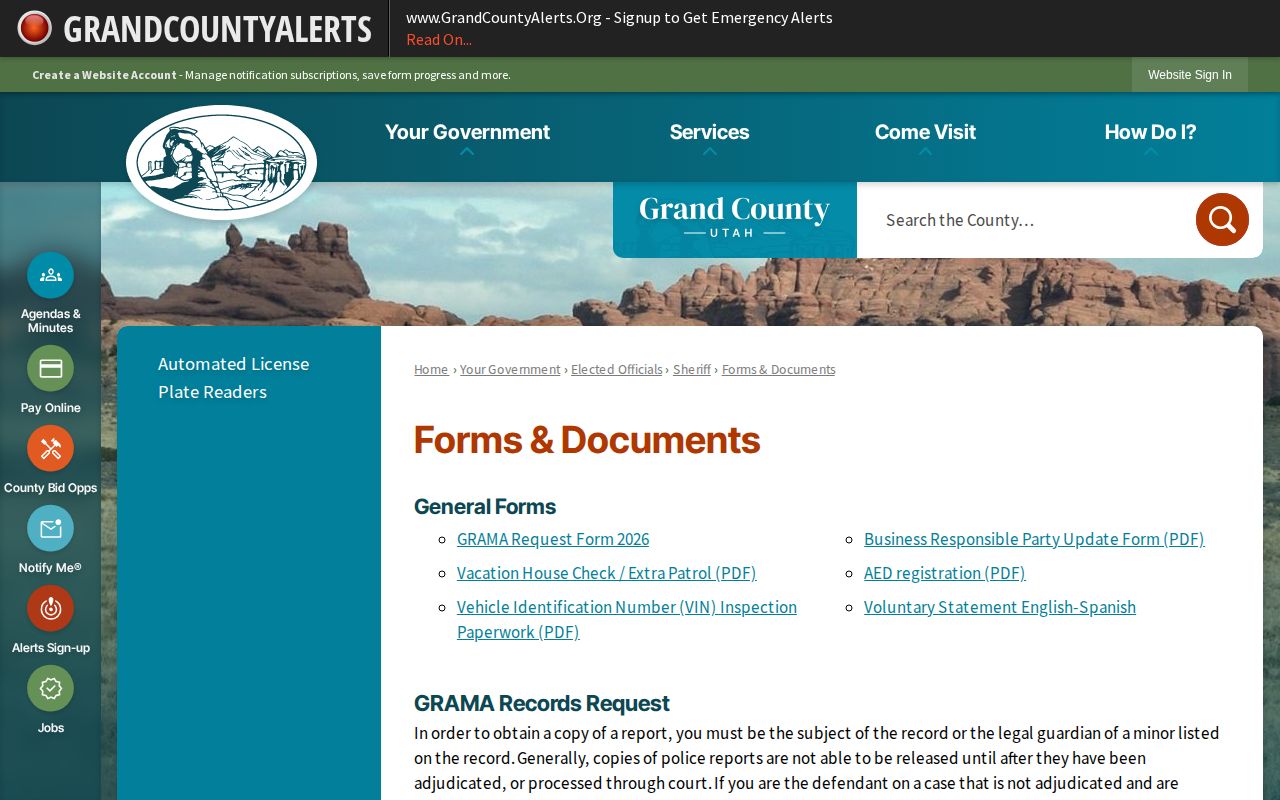
The screen supports requesting a specific booking image from the agency rather than assuming the live roster provides a photo gallery.
Utah Rules for Grand County Mugshots
Utah Code §63G-2-305(80) classifies an image taken during jail booking as protected unless a listed exception applies. Those exceptions can include a conviction based on the conduct connected with the booking, a specified law-enforcement release for apprehension, public safety, or an investigation, a judicial order grounded in a legitimate law-enforcement interest, or the controlled display addressed by the booking-photo statute.
This rule is more precise than saying that every mugshot is public. Grand County says some adult arrest information, including arrest photos, may be available, yet it also notes limits tied to case status, investigation, privacy, safety, fair trial, and juvenile records. The custodian must classify the requested image. Releasable charge text or a booking number does not automatically make the photo releasable.
- Booking photo
- An image created during arrest processing and held by the booking agency.
- Protected record
- A government record withheld from general public access under a stated GRAMA classification.
- Redaction
- Removal of restricted parts while releasable portions of a record are supplied.
- Disposition
- The court's recorded outcome for a charge, which is different from the fact of arrest.
The Sheriff's official pretrial position description confirms that mugshot photography occurs during arrest processing, while the current roster shows no image field. Together, those facts explain why a record may exist inside the agency without appearing online. Let the custodian decide the image classification and preserve the written response.
Note: A release record can be public in part while its booking photo remains protected under a separate Utah rule.
No Grand County Mugshot App
No official Grand County Sheriff mobile app or release-photo social feed was verified in the required channel sweep. The official county website, the jail telephone, and the Sheriff's GRAMA process are the defensible local routes. An app branded for “Grand County” may refer to another state. A nationwide product may copy an old record without receiving corrections from the Utah agency.
Do not use an unofficial app's photo as proof that the person remains in jail or has been released. Cached images can outlast a custody event, a court disposition, or a change in public access. If an image supplies a useful lead, return to the booking number and official record. That step protects against name collisions and keeps the photo attached to the right jurisdiction.
Grand County State Offender Photos
A person sentenced in Grand County and committed to the Utah Department of Corrections follows a state record path. UDC identifies a prison photo or mug shot among information that may be public. Its offender search covers people currently under UDC supervision, including incarcerated people and many parolees or probationers. It does not cover an ordinary unsentenced Grand County detainee, and a fully discharged person may no longer appear.
A UDC image is an institutional photo from the state corrections system. It should not be labeled as the Grand County booking photo unless the source establishes that fact. Read legal status apart from custody location. A person on parole has left prison but remains supervised; a person whose sentence has terminated may require a written UDC record because the current-only search can stop returning the profile.
The UDC public-information source was captured for its legal-status, sentence, Board-date, and photo categories.
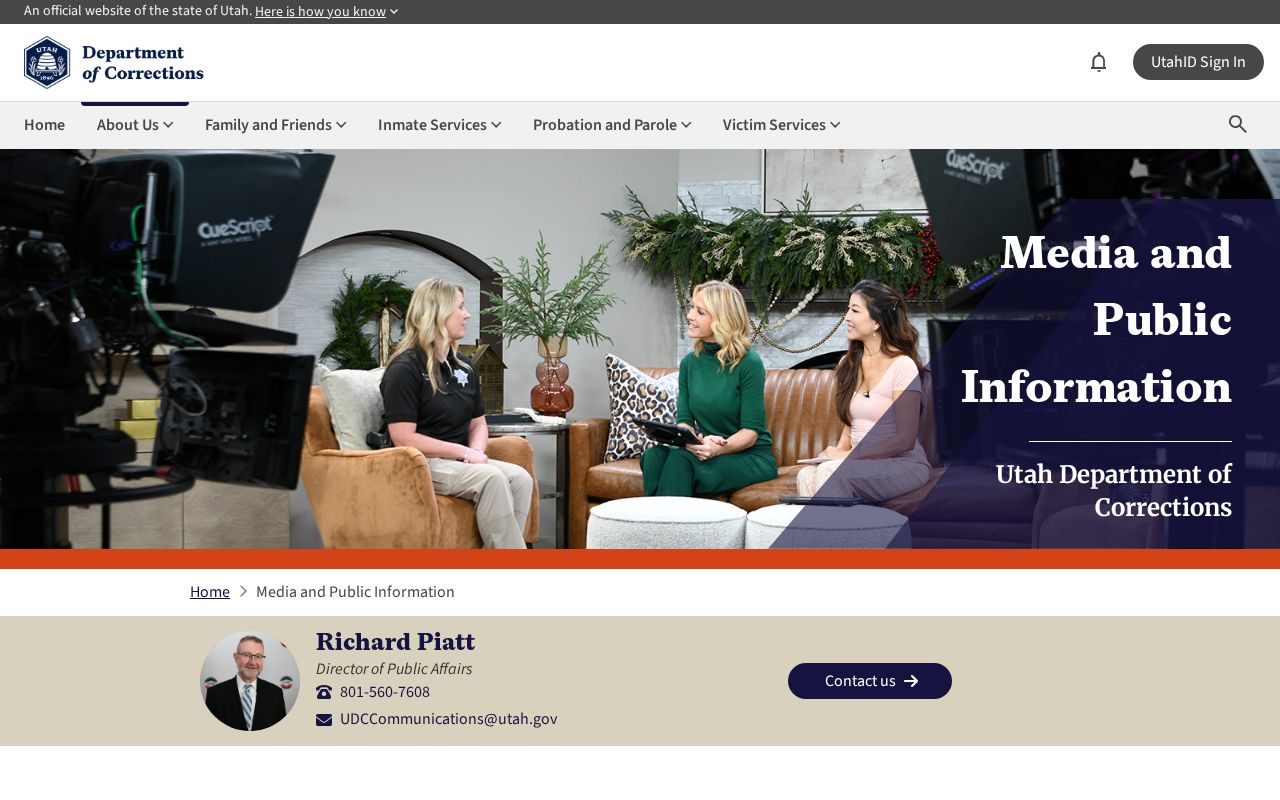
That statewide source is appropriate only when UDC created or controls the image and release status.
Grand County Mugshot Use Limits
Utah Code §17-72-802 adds a special control to booking-photo access. A requester seeking a copy from a sheriff must sign a statement that the image will not be placed in a publish-for-pay publication or site. The sheriff also must not provide a photo protected under GRAMA. These limits apply before the separate removal rules become relevant.
The statute also imposes duties on publish-for-pay operators. Its ordinary process requires removal and destruction after a proper request within 30 calendar days and restricts conditioning removal on more than $50. A shorter seven-calendar-day route applies when proof shows the charge was acquitted or not prosecuted, or the record was expunged, vacated, or pardoned. Read the current statute for exceptions, proof rules, and remedies.
The official statute capture shows the current booking-photo framework.
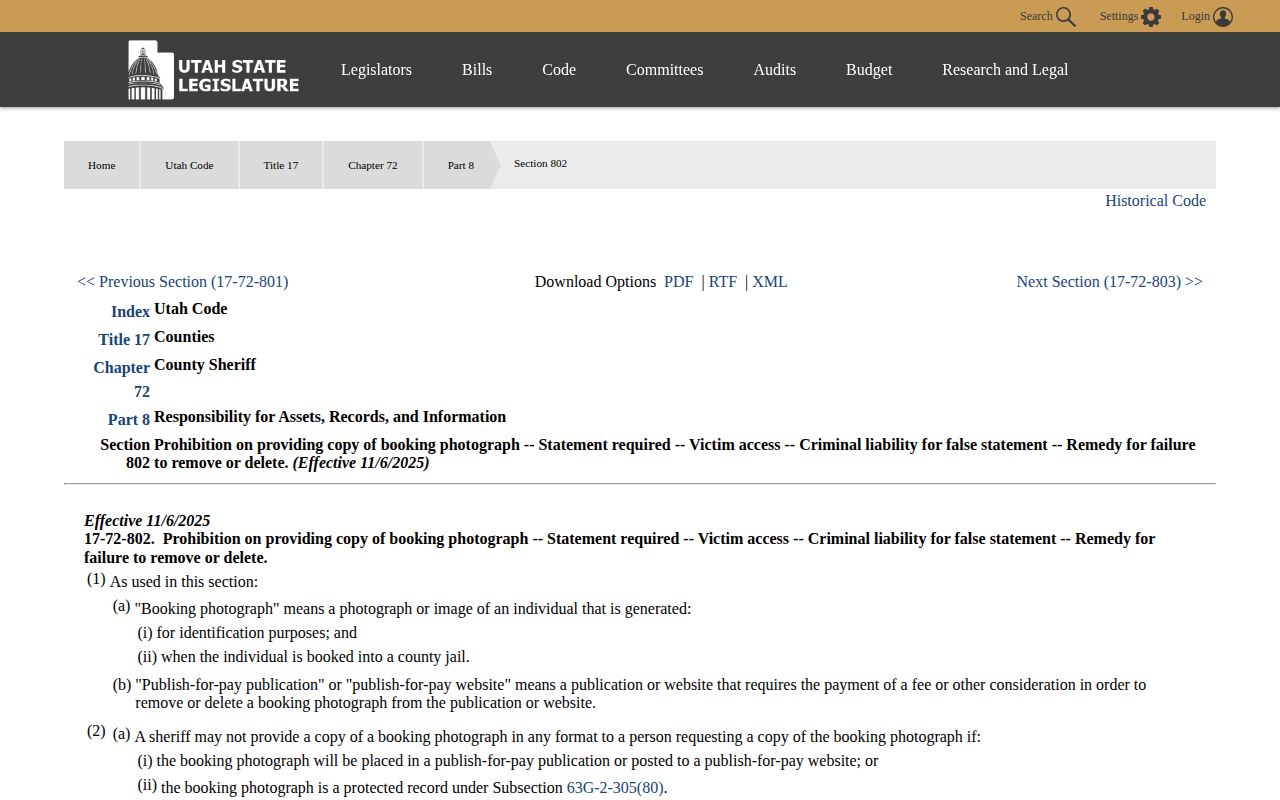
Its requirements show why a released mugshot cannot be treated as categorically open or separated from the requester's certification.
Note: Use the current code text and proof requirements, since the booking-photo section number and procedures have changed over time.
Grand County Mugshots After Expungement
Expungement seals qualifying government records through Utah's court and Bureau of Criminal Identification process. Eligibility depends on the case result, offense, later cases, and elapsed time. An expunged court case can disappear from public XChange access. That change does not mean the old jail event never occurred, and it does not automatically erase every independent news report or private copy.
The seven-day booking-photo removal path under §17-72-802 is distinct from deleting the Sheriff's underlying record. A person using that process supplies proof of acquittal, nonprosecution, expungement, vacatur, or pardon to the covered publisher. For an official-source correction or access question, contact the custodian that created the record. A mistaken booking field should be addressed as a correction, not mislabeled as an expungement request.
Utah Courts explains the court expungement process, while Utah BCI provides certificate and eligibility information. Keep the order, proof of service, and agency response together. A missing online image can result from many causes, so it should never be presented as proof that expungement occurred.
Verify Grand County Mugshot Context
An official Sheriff release or a reputable local report may preserve an arrest image tied to a notable incident. That material provides context, not a released-inmate database. Read the publication date, identify the agency credited with the image, and check the later court disposition. An arrest allegation should never be rewritten as an adjudicated fact.
Private aggregators can also surface a picture, but they may cache it long after release or a case change. No commercial mugshot or data-broker source is endorsed here. Use a private image only as a lead, then verify the person, booking, legal status, and release through official records. The full Grand County released-inmate record path covers the county release sheet, court docket, UDC status, and federal or immigration follow-up when custody moved.
Good photo discovery ends with source control. Label the image as a booking or institutional photo, name the agency that created it, give the relevant date, and pair it with the later custody and court record. That preserves the difference between arrest, conviction, release, parole, discharge, and expungement.
Note: A photo's continued visibility cannot establish present custody, current supervision, or the final outcome of the related charge.