
Grand County Inmate Release Meaning
A Grand County jail release ends one period of local custody. It does not always mean the person walked into the community with no other legal obligation. Bond, release on recognizance, a court order, dismissal, time served, and completion of a county sentence can all end a jail stay. A transfer to the Utah Department of Corrections, another jail, a federal agency, or immigration custody also removes a name from the county list. In those cases, local custody ended but confinement may not have ended.
Read each event by its own terms. A bond release is not a case disposition. A transfer is not a community release. Parole means prison custody has ended while the sentence continues under supervision. Probation is court-ordered supervision and does not, by itself, prove a prior state-prison stay. Discharge or sentence expiration is different again because it marks the end of the sentence or supervision described in the controlling record.
The most reliable proof comes from the agency that performed the event. The Grand County Sheriff holds local booking and release data. Utah courts hold release orders and case outcomes. UDC records state custody and supervision, while the Utah Board of Pardons and Parole owns parole decisions. This division matters even though several offices sit in Moab's Center Street government area.
| Release type | What it means | Next record to check |
|---|---|---|
| Bond or recognizance | Local custody ends while the case remains open. | Jail release sheet and court docket |
| Time served or court order | The jail acts on a sentence calculation or judicial command. | Release timestamp and signed court entry |
| UDC transfer | Grand County custody ends, but state custody begins or continues. | UDC offender record and Board record |
| Parole | Prison custody ends and AP&P supervision begins. | Board order, UDC status, and AP&P record |
| Federal or ICE transfer | The county releases the person to another legal custodian. | BOP, ICE, USMS, and federal court records |
Grand County Release Record Fields
A booking-and-release sheet connects the start and end of a Grand County custody episode. The Sheriff's public roster does not display this full history. It is a current list with booking number, name, name number, and charge details such as statute, offense, court, code, and class. It omits release time and release reason. That makes a focused records request essential when the exact event must be established.
Ask for the native record rather than assuming each field will be disclosed. A local release sheet may contain the items below, but the research does not prove that every Grand County version exposes every item. A custodian can redact protected data while releasing segregable public portions.
| Requested field | What it can establish |
|---|---|
| Name, identifiers, booking number | Which custody episode belongs to the person |
| Booking and release timestamps | When local custody began and ended |
| Release reason or type | Bond, recognizance, time served, court order, transfer, or another coded event |
| Releasing authority | The court, jail official, Board, or agency that authorized action |
| Destination or receiving agency | Community release versus transfer to another custodian |
| Charges, court, and bond | The case tied to the booking, not a finding of guilt |
Web visibility and agency retention are different. Grand County publishes no period during which a released entry remains online because the roster is not an archive. If an old record matters, ask the Sheriff which retention schedule covers the booking-and-release record. A sealed or expunged case can also narrow public access without erasing the fact that an operational record once existed.
Request Grand County Release Records
Sheriff records use the Sheriff's GRAMA route. The county open-records instructions direct requests for Sheriff's Office material to that office. The Sheriff Forms and Documents page provides the form and calls for photo identification, incident dates, a clear record description, and a case number when one is known.
The request should identify a person and approximate booking date, then ask for booking number, admission and release times, releasing authority, release reason, and any receiving agency. Ask for a publicly releasable booking photo only when needed. State that exempt parts may be redacted instead of withholding the whole record, and request a cost estimate above a chosen limit.
- Confirm the spelling, approximate event date, and any booking or case number.
- Download the current Sheriff GRAMA form and include the required identification.
- Describe the booking-and-release sheet and requested fields with reasonable detail.
- Choose the listed submission method and ask for electronic copies when practical.
- Track the response, any cited exemption, fee estimate, and the date records arrive.
Grand County's research-date form lists staff research and redaction at $25 per hour after the first 15 minutes, reports at $1 per page, printed photos at $2 each with a $10 minimum, digital photos at $20 plus media if needed, and a CD or thumb drive at $25. Fees can change, so confirm them on the current form. The Sheriff page states a normal response within 10 working days and five working days for a requester who establishes a right to expedited treatment.
The official Grand County records page shows the local routing process.
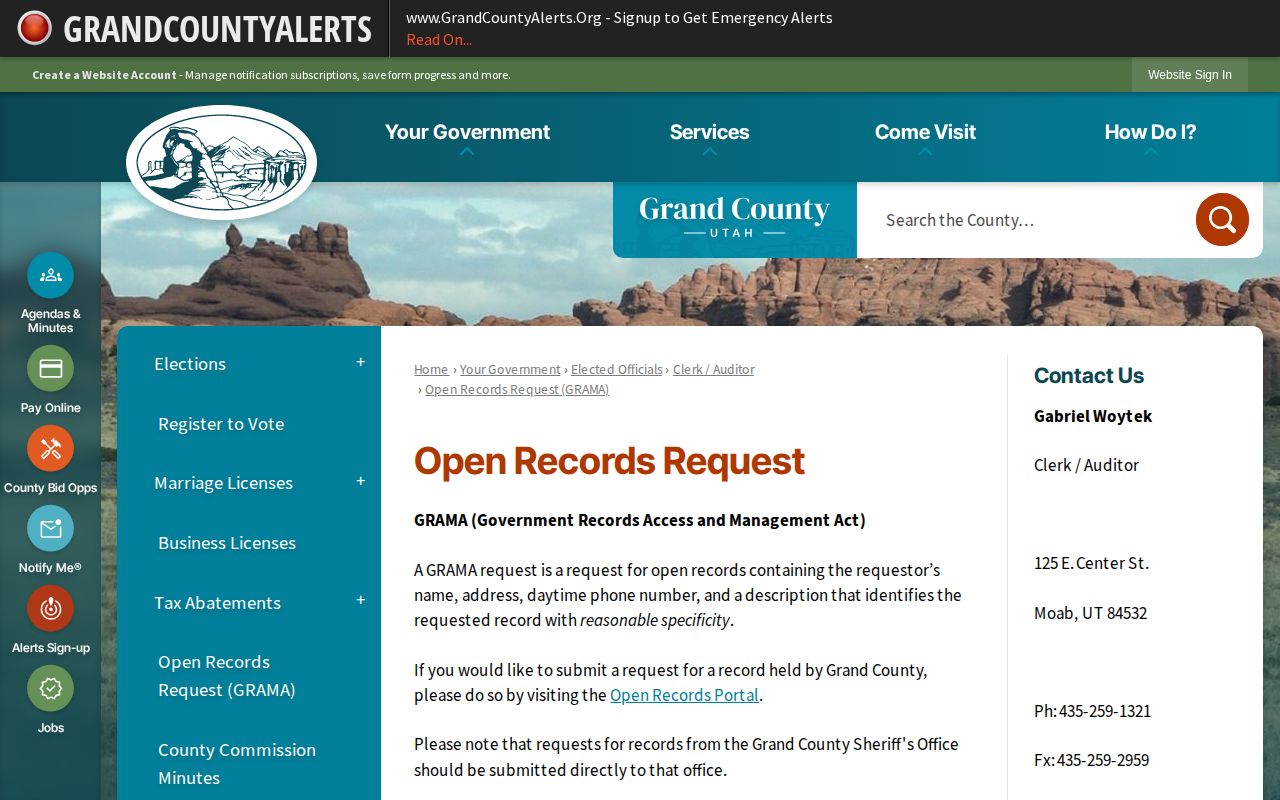
The screenshot reinforces the key routing point: Sheriff booking and release records go through the Sheriff rather than a general county department.
Note: Grand County lists fees and staff assignments on live forms, so confirm both before sending a request or visiting an office.
Grand County Release Record Law
Utah's Government Records Access and Management Act, or GRAMA, is found in Title 63G, Chapter 2. It sorts records into public, private, controlled, protected, and other restricted classes. A written request must describe the desired record with reasonable specificity. Section 63G-2-204 governs the response framework. Agencies may charge lawful actual costs and require prepayment in stated circumstances.
Not every line in a jail file is public. Juvenile, medical, victim, safety, investigative, sealed, and expunged material can be withheld. Ask for the public portion and the legal basis for each denial or redaction. If a record contains a clerical mistake, send the originating custodian the booking number, disputed field, correct fact, and supporting official document. A jail error belongs with the Sheriff; a court error belongs with the clerk; a UDC status error belongs with UDC.
Grand County Bond Release Location
Grand County publishes a precise local bond path. Its bail procedures say the jail does not accept credit-card bail. The Seventh District Court and Grand County Justice Court accept credit-card bail or bond on weekdays during their listed office hours. Bond transactions use the North Door at the 100 North Street entrance.
That entrance is documented for the transaction. It is not proof that every person physically exits there. Call the jail before arranging pickup because Grand County does not publish a standard release door, family waiting area, or routine release hour. Conditional release can also involve county PreTrial Services while the criminal case is pending. That local role differs from UDC probation and parole after sentence.
The official bail page illustrates the division between court payment and jail release processing.
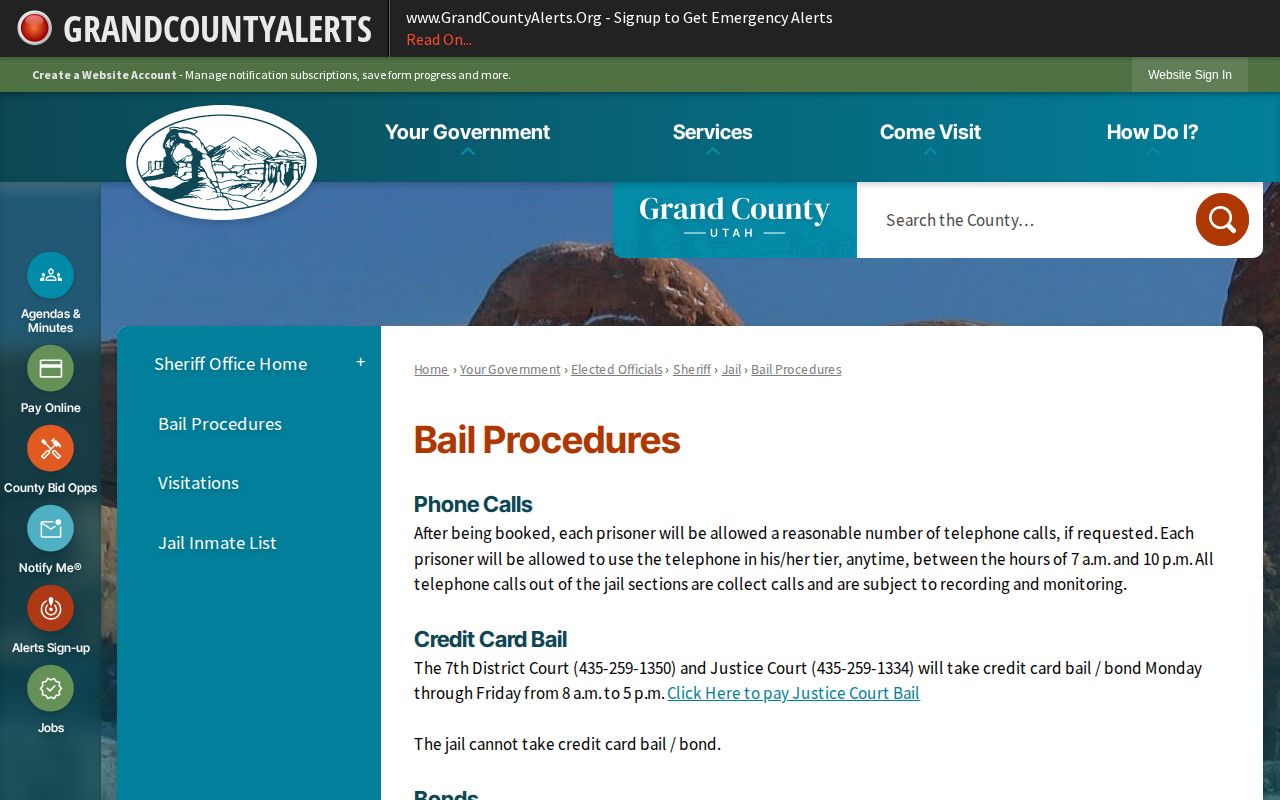
The image supports where a bond is handled, while the jail release sheet remains the source for when custody actually ended.
Grand County Release Property Records
Utah law addresses state-prison transition planning and inmate property in Title 64, Chapter 13. Those state rules should not be treated as a published Grand County jail procedure. The local jail page discusses intake and property drop-offs, but it gives no public release-property hours or return process.
A released person seeking property should call the Grand County Jail and ask which counter handles it. A person disputing a release field should use the records custodian. The same building area does not make those functions interchangeable. Keep receipts, property sheets, and release paperwork because each document answers a different question.
Grand County Release Record Expungement
Utah Courts and the Bureau of Criminal Identification provide the official expungement process. Eligibility depends on the disposition, offense, later cases, and time that has passed. An expungement changes government access to the case. It does not mean a roster omission proves the event never occurred, nor does it automatically erase every private copy or news report.
The Utah Courts expungement materials explain the court path, while BCI expungement information addresses the certificate process. Booking-photo rules add a separate remedy under Utah Code §17-72-802 for qualifying publish-for-pay uses. That removal route does not delete the Sheriff's underlying release record.
Find Grand County Released Inmates
Start with custody type, not with one broad name search. A recent local arrest belongs first in the Grand County chain. A state sentence belongs in UDC and Board records. Federal and immigration custody each have separate tools. Matching names across systems without a booking, offender, register, case, or A-number can produce a false match.
- Check the official Grand County current list. A listed person was shown in custody at the page's update point.
- If absent, call the jail and ask whether the person was released or transferred, plus the time and receiving agency.
- Request the local booking-and-release sheet when documentary proof is needed.
- Search UDC and the Board for a state prisoner, parolee, or felony probationer.
- Read the correct Utah court docket for release authority and final case disposition.
- Use BOP or ICE only when the local record or case points to federal or immigration custody.
Grand County has no official recent-release feed. The Released Last 24 Hours page explains how to frame an exact same-day request. For one named person, the sequence above gives stronger proof than watching the live list for a disappearance.
Grand County Release Roster Limits
The Grand County Jail Inmate List is a date-stamped current-custody snapshot. Research found no released-only filter, 24-hour selector, 72-hour selector, update promise, or post-release retention period. It shows booking and charge identifiers, but no release time or reason. Do not reconstruct a release log by comparing cached pages.
The official current-list capture shows the fields and lack of a release view.
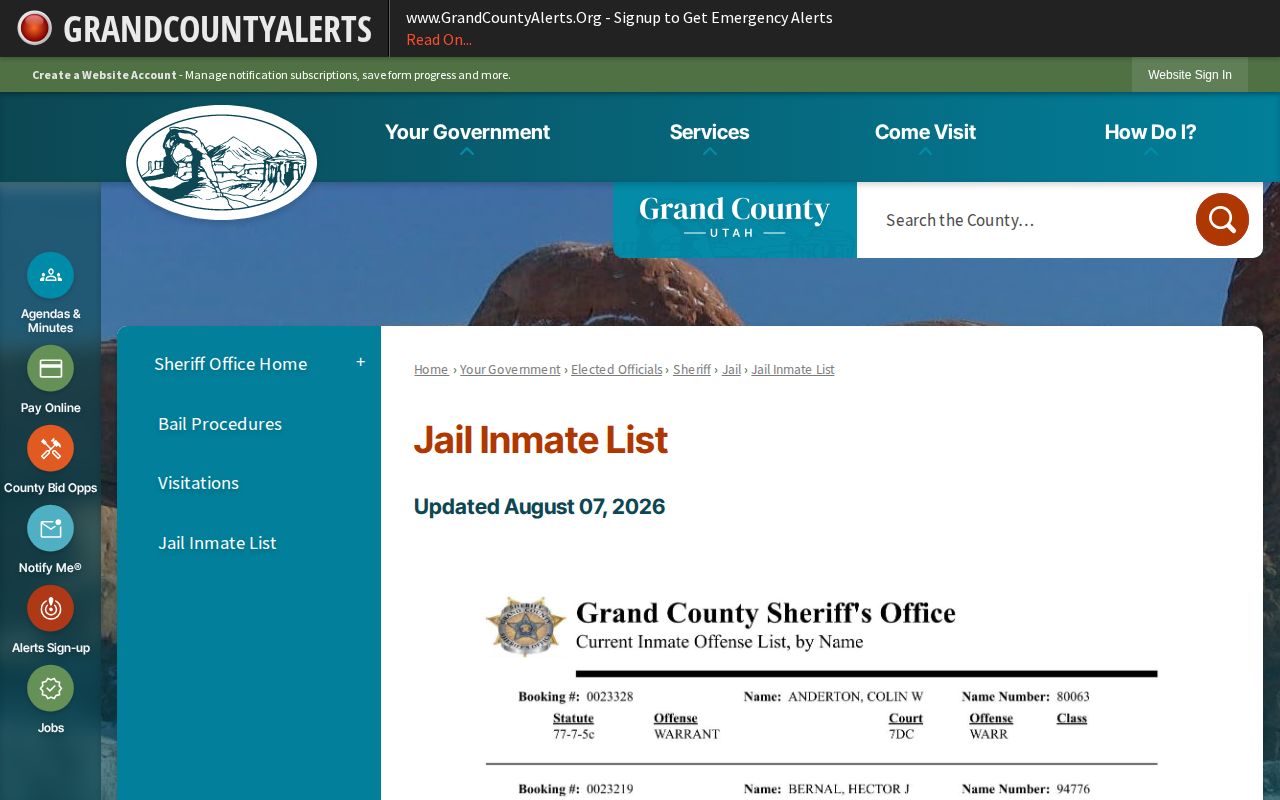
This is useful for confirming who appears in custody at the listed update point. It is not a database of Grand County released inmates.
| Question | Correct source |
|---|---|
| Is the person currently listed? | Grand County current jail list |
| When did local custody end? | Grand County booking-and-release record |
| Why did the case end? | Utah court docket and order |
| Is state supervision active? | UDC offender search and AP&P |
| Did federal custody end? | BOP record or the relevant federal custodian |
Grand County UDC Release Search
The UDC Offender Search accepts a UDC offender number or a name. A name query needs at least one letter in both the first and last name fields. Its key limit is scope: results cover people now incarcerated by UDC or now on probation or parole. It does not cover an unsentenced county detainee, and a fully terminated UDC case may no longer appear.
| Search or result field | How to use it |
|---|---|
| UDC offender number | Best key for separating people with similar names |
| First and last name | Broad search when the number is unknown |
| Date of birth | Identity check shown in the list result |
| Legal status and location | Distinguishes custody from parole or probation |
| Release Date/Type | Exact observed label; it may be blank or not applicable |
| Case manager details | May appear on a currently supervised record |
Search the number first when available, compare identity details, and open the record. Read legal status separately from placement location. Then check the Board's hearing and decision search for a future parole action. If the person has vanished from the current-only search, request a UDC termination, expiration, or discharge record instead of assuming a clean end to supervision.
The official offender-search capture shows the state fields and current-supervision warning.
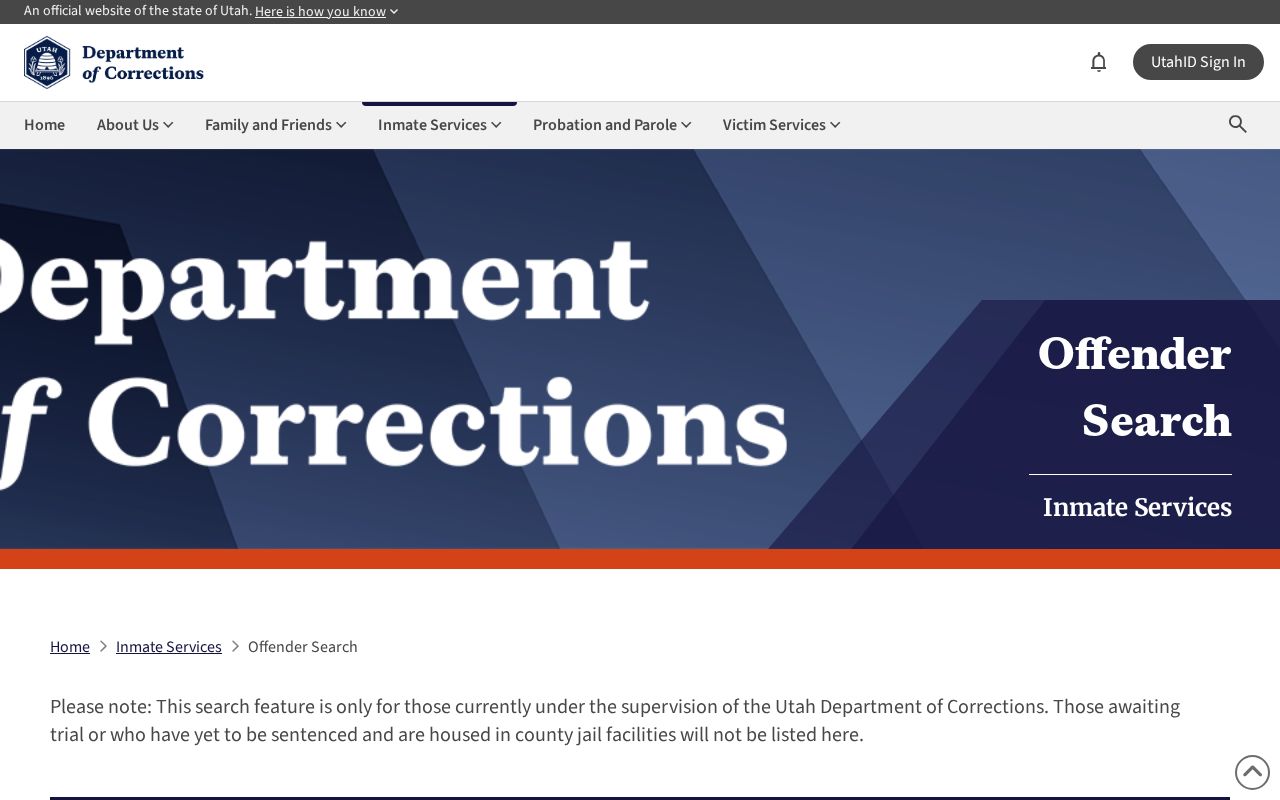
The warning is decisive: a missing result cannot confirm why a Grand County-related UDC record no longer appears.
Grand County Release Court Proof
The jail record and court record answer related but separate questions. The release sheet proves the operational time and destination. A docket entry proves legal authority, conditions, dismissal, plea, judgment, jail credit, probation, or commitment to UDC. Search by case number where possible because names can collide.
Utah XChange provides broad public district and justice court information under its access and fee rules. MyCase is for a party with qualifying identity access, not a public people search. Some sealed, expunged, juvenile, and other nonpublic cases will not appear. Ask the correct clerk for records that require direct access.
Does a dismissal date prove the jail release time? No. It explains the court outcome, but the Sheriff's release timestamp records when the jail acted.
Grand County Release Supervision Checks
UDC Adult Probation and Parole supervises state parolees and adults on felony probation. The Region 6 Moab office serves Grand and San Juan Counties. A UDC search hit can describe someone living in the community under supervision, so never equate every hit with incarceration. The Grand County parole and probation page separates Board decisions, UDC status, and local office verification.
Utah VINE adds prospective notice. Choose Utah, search the exact person, confirm the supplying agency, and register on the matching record. UDC says calls repeat hourly for up to 48 hours until the correct PIN confirms receipt. Yet the Board warns that technical issues can cause missing or inaccurate notices. Confirm a VINE alert with the jail, UDC, Board, or successor agency.
- Parole
- Community supervision after release from a prison sentence.
- Probation
- Court-ordered supervision that may follow jail or avoid prison.
- Discharge
- The documented end of a sentence or supervision status.
- Transfer
- A change of custodian, not necessarily freedom.
Grand County Federal Release Search
The BOP Inmate Locator covers federal Bureau of Prisons records, generally from 1982 onward. Search a BOP, FBI, INS, or DCDC number when possible. A result may show “Released,” “Not in BOP Custody,” a release date, or a community placement. None proves release from Grand County Jail, and later custody or supervision may still exist.
ICE's Online Detainee Locator uses either a nine-digit A-number with country of birth or exact biographical details. ICE states that the system can include people released from its custody within the last 60 days. After that window, absence is expected and proves neither the date nor destination. If a Grand County record names an ICE hold or transfer, use the locator and the official ERO field-office directory. No ICE detention center has been verified in Grand County.
No comparable public historical USMS locator was found. A Grand County release entry naming USMS bridges the local and federal records. Use the federal court case and USMS records process for the next event.
Grand County State Release Location
A person tied to Grand County can be physically released in Salt Lake City. UDC's Release Day instructions say paroles and releases are processed on Tuesdays at Utah State Correctional Facility. That path covers almost all state prisoners held in contract county jails. Releases directly from the county jail are described as extremely rare, with family notified when one will occur.
The confinement site and release location can therefore differ. A person sentenced from Grand County might stay at Central Utah Correctional Facility or a contract jail, travel to USCF for processing, and then enter parole or a community correctional center. Confirm legal custodian before choosing a pickup site.
The UDC release-day capture documents the centralized process.
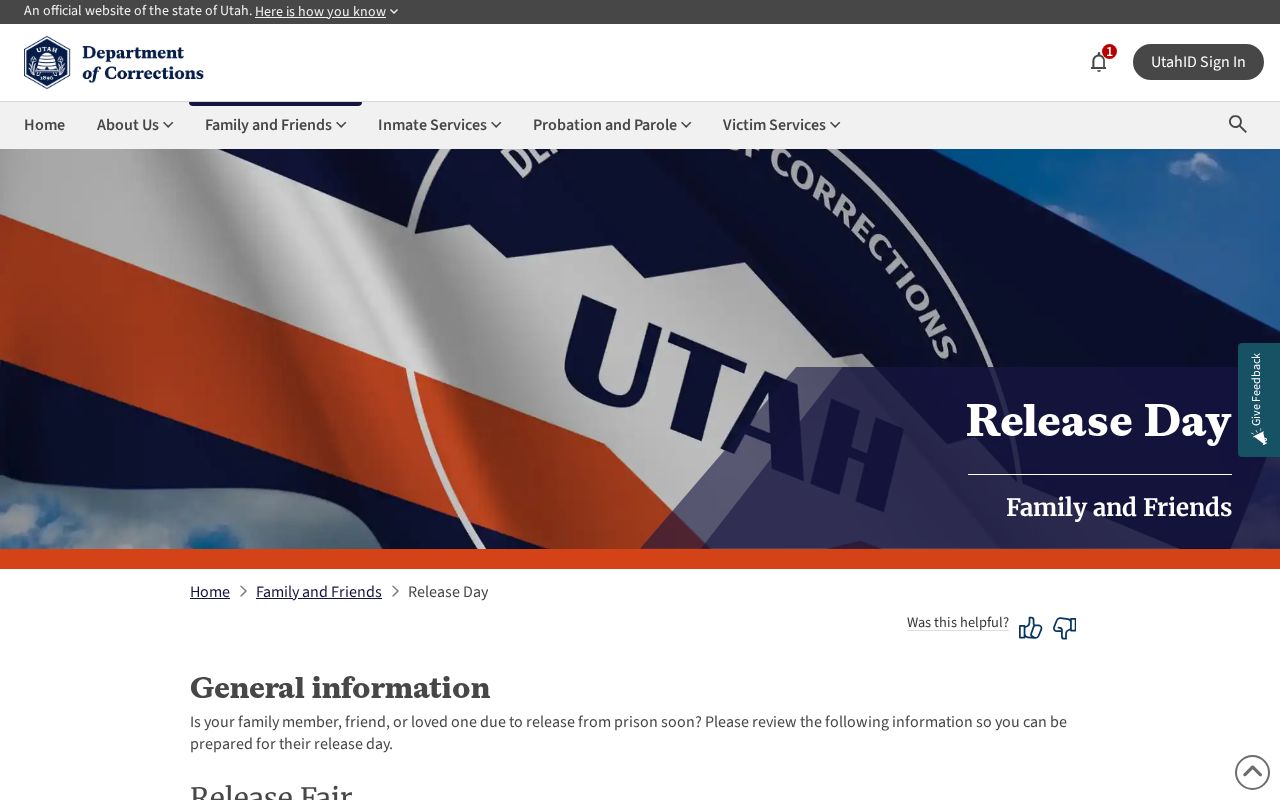
This state process must not be turned into a Grand County Jail release schedule.
Transportation After Grand County Release
Moab Area Transit is a fare-free local option, but its published page does not promise jail pickup. During the 2026 peak period from March 16 through October 15, it lists on-demand service daily from 8 a.m. to 9 p.m. During the off-season from October 16 through March 15, it lists on-demand weekday service from 9 a.m. to 5 p.m. The service is wheelchair accessible and can be requested through the MAT app or 833-628-3733.
Check the live service map and call before relying on a ride. A family should also confirm the true release site first. MAT may be relevant to a local Moab release, while a UDC parole may be processed at USCF far from Grand County.
Grand County Release Facility Routes
The facility name determines which record controls. These links identify every custody or supervision system in the Grand County Facility Map. Several are outside Grand County, and two are systems rather than local buildings.
- Grand County Jail: local release sheet, jail phone, and Utah court docket.
- Utah State Correctional Facility: UDC status, Board order, and centralized release processing.
- Central Utah Correctional Facility: UDC and Board records, with ordinary release processing at USCF.
- UDC county-jail contracting network: state legal custody even when placement is in a county building.
- Region 6 Adult Probation and Parole, Moab: community supervision, not detention.
- Federal Bureau of Prisons system: federal release status, not county release proof.
- Immigration custody systems: follow-up after a documented ICE hold or transfer.
Use the original agency record for each step. A single absence across several public tools is not affirmative proof because spelling, update lag, scope limits, sealing, and full discharge can all remove a result.
Public Record Search
Sponsored Results